
Blogs
Home /Blog

The Long-Term Impact of Short-Term Financial Fixes
While growing businesses across the UK, the USA, and the Gulf face similar pressure points, there is a significant disparity in environment and regulation. The pressure points include an unexpected tightening of cash flows, more difficulty in preparing accounts, and increasing complexities in maintaining compliance.
In such moments, it makes practical sense to focus on short-term financial solutions. They minimize the pain and let the business keep rolling. To a lot of founders and leadership teams, they appear to be the obvious thing to do.
What is not often visible at the time, however, is the continued impact these short-run financial measures can eventually have on the business beyond the original issue a measure was designed to address.

Why short-term fixes are common across regions
Although varying in terms of taxation policies, legal frameworks, and corporate forms, the underlying factors are always similar.
In the UK and US, rapid scaling often outpaces financial oversight. In combination with businesses in the Gulf extending transactions and dealing with complications in structuring or conducting international transactions, there exists strain with enhanced intricacy.
Leadership groups usually focus on growth, market entrance, and movement. The financial structure is normally expected to change quietly in the background.
That is, short term fixes are derived from rational assumptions:
- The situation is temporary
- The business will formalize these processes later
- Existing systems are enough for now
In the initial stages of the business, this assumption holds true most of the time. What becomes problematic is when the business grows and evolves and those assumptions remain the same
How temporary decisions shape long-term outcomes
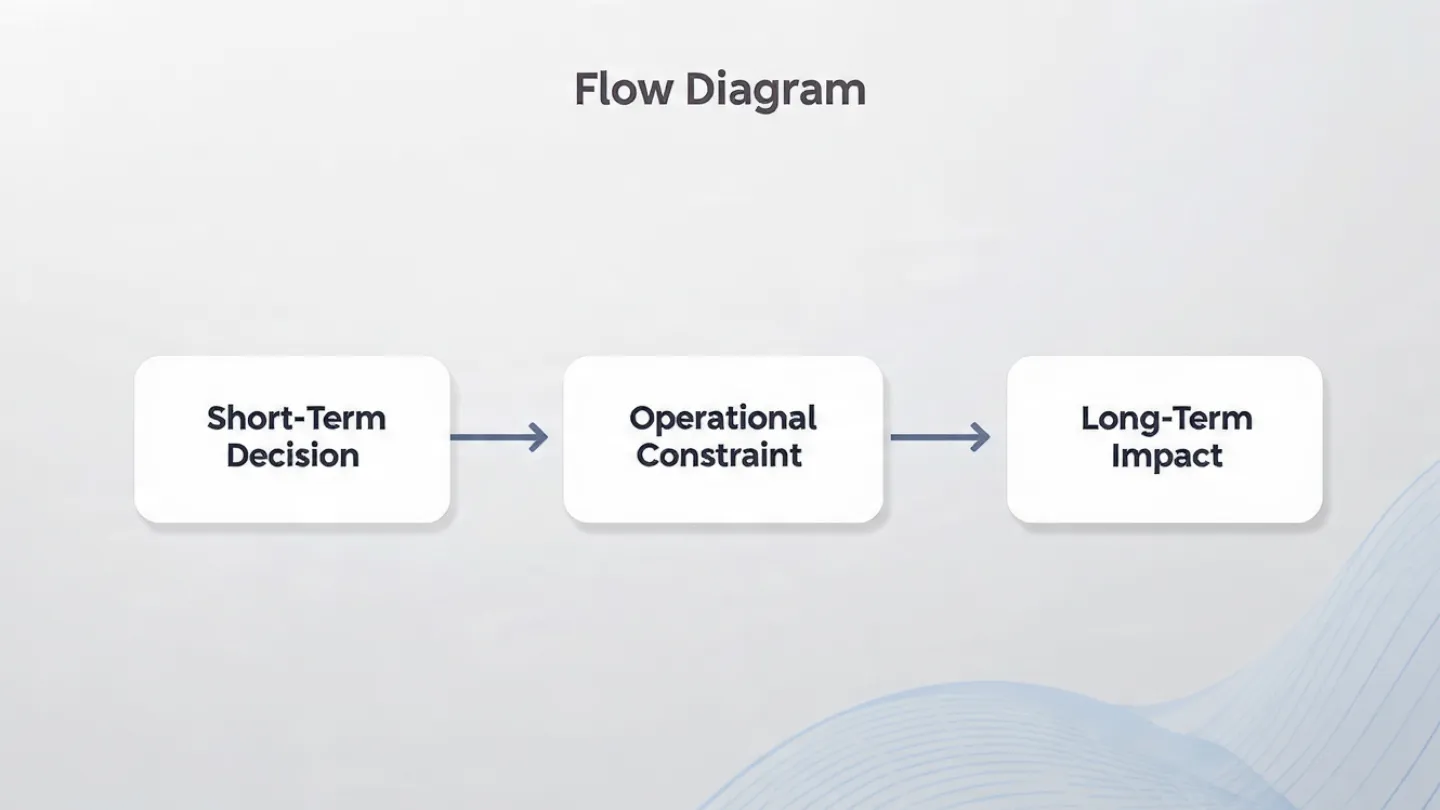
Short-term financial measures are rarely less effective; they are always subtly limiting.
One possible work-around in reporting may compromise visibility. A tax decision driven by short-term efficiency may compromise current flexibility with changes in ownership. Delayed compliance may create uncertainty during audits, financings, and/or regulation.
Eventually, the organization may notice that decision-making is slower. Financial issues may take more time to explain. Trust in numbers may erode, even when the business looks successful. The difficulty is not with operations but with structure, and managing that becomes increasingly difficult when the business grows.
The compounding effect in complex environments
Within more mature economies, such as the UK and US, and within the rapidly changing Gulf economies, it is recognized that financial systems do not act in isolation.
Cash management has its impact on reporting. Reporting, in turn, affects forecasting. Forecasting, moreover, affects hiring, investing, and expanding. A decision made on short notice may impact many other areas.
As interactions build up, businesses can encounter:
- Increased dependence on manual supervision
- Limited Forward Visibility
- Trouble aligning financial information with strategic decisions
- Increased external scrutiny from outside stakeholders
These results are likely to occur over time, which makes them relatively simple to underestimate.
Why these challenges surface later
Their persistence can be explained by the fact that short-term financial remedies experience steady growth at the beginning.Revenue growth helps offset poor structure. Inconsistent processes seem manageable when volumes of transactions are low. Regulatory risk can remain dormant until the business becomes at a more visible and regulated stage.
With scale, tolerance for ambiguity diminishes. Investors, authorities, and stakeholders demand consistency and clarity. The speed with which financial decisions were made becomes limiting. By the time these constraints become known, undoing them usually entails more effort than it would have taken if they were addressed in time.
Flexibility versus fragility in financial decisions
The key difference between healthy and unhealthy short-term decisions and risky ones is based on their adaptability. Flexible decisions are based on the recognition that the business will change, while fragile decisions ignore the possibility of change.
For instance, making a structural decision on a temporary basis so that revision in the future is considered enables flexibility in the business as it reaches across different nations. Repeating the decision without considering revision can create rigidity. The challenge to leadership is in recognizing the point where a solution, once effective, is no longer aligned with the level of operations.
Experience, hindsight, and financial structure
Similarly, experienced founders across regions have identified patterns of thinking. Many long-term constraints can be linked to decisions that, at some point, appeared logical.
This is not a failure of judgment; rather, it highlights the understanding that businesses grow quicker than their financial systems if the systems are not properly revisited.
Lack of reassessment is a rare problem with short-term financial fixes .The absence of reassessment causes risks to accumulate with increasing complexity.
Signals that short-term fixes are limiting growth
There are clear indicators within UK, US, and Gulf businesses that indicate financial cuts are no longer acceptable:
- Conversations that are related to finance seem reactive rather than strategic
- Reports need to be understood before using them with confidence
- Decision-making becomes slower due to uncertainty rather than lack of opportunity
- External reviews or audits help uncover gaps that were not previously noticed.
This points to a period where the business has recognized the importance of certainty over convenience.
Moving toward long-term resilience
To move away from financial quick fixes, it does not mean stopping being agile. It means realizing financial decisions are no longer made in a vacuum.
With increasing organisational size, finance is no longer about resolving specific problems but more about maintaining a coherent picture between reporting, compliance, planning, and governance. Organizations that realize this shift early on seem to enjoy increased flexibility; thus, they can adapt to differences in regulation, complexity, and other factors easily.
A broader view of financial decision-making

“The short-term financial solutions are a regular feature of almost every growth path, regardless of geography. They’re a sign of activity, not mismanagement.”
Their long-term impact is also dependent on whether they are reevaluated periodically as the business changes.
Long-term-oriented leaders who view the implications of their financial decisions more critically are more likely to sustain stability, optionality, and confidence in the face of growing complexity. The challenge is not to avoid making short-term decisions, but to recognize the extent to which the role the business wants to make in the future requires a change to its short-term approach.
Frequently Asked Questions
Short-term financial fixes are decisions made to address immediate financial pressure, such as cash flow gaps, reporting delays, or compliance timing issues. They are usually practical responses to urgency, but they are not always designed with long-term structure in mind.
The impact develops when temporary decisions remain in place as the business grows. Over time, these fixes can influence reporting quality, financial visibility, and decision-making, even if the original problem no longer exists.
No. Many short-term financial fixes are reasonable and necessary at the time they are made. The risk arises when they are not reviewed as the business becomes more complex and financial expectations change.
They tend to become limiting when leadership begins to question the reliability of financial information, decisions take longer due to uncertainty, or external stakeholders require additional explanation around numbers or structure.
While regulations differ across regions, the underlying challenge is similar. As businesses scale, financial decisions interact across reporting, compliance, and planning, making early shortcuts more visible regardless of jurisdiction.
Common signals include reactive financial discussions, reduced confidence in reports, growing reliance on manual oversight, and difficulty aligning financial data with strategic goals.
Short-term financial fixes are most common in early and growth stages, but their long-term impact is often felt later, when the business is more established and requires greater financial clarity.
Financial flexibility allows a business to adapt as it grows. Financial fragility develops when decisions made for speed or convenience limit future options and are difficult to unwind.
Early growth can mask structural weaknesses. Revenue momentum and operational focus often delay deeper financial review until the business reaches a point where clarity and consistency become critical.
As businesses grow, financial decisions made for speed often deserve a second look. Taking time to reassess earlier assumptions can help leaders regain clarity, reduce hidden constraints, and make decisions with greater confidence.
For organizations navigating increased complexity across the UK, US, or Gulf regions, a measured advisory perspective can help ensure short-term choices continue to support long-term objectives.